Temperature: Hot, served immediately
Where: Carretilla / picaronería
Price range: S/8–25
What it is
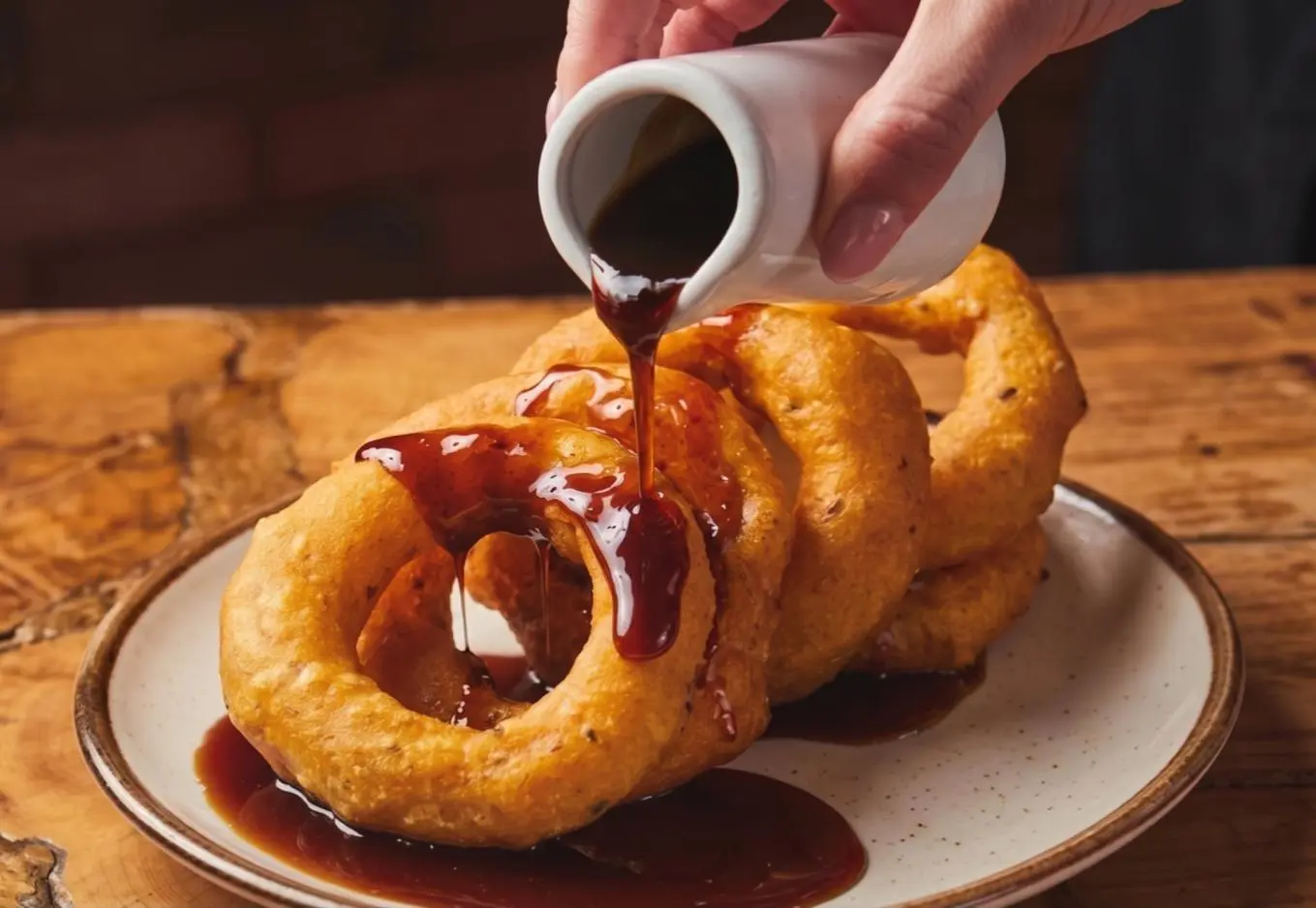
Picarones are Peru's signature street dessert: ring-shaped doughnuts made from a yeasted dough of mashed sweet potato and pumpkin (camote and zapallo loche or macre), deep-fried at high heat until the outside is amber and crisp and the inside is soft and slightly orange-tinted, then drizzled generously with miel de chancaca — a thick syrup of unrefined cane sugar (chancaca), boiled down with fig leaves, orange peel, cloves, and a stick of cinnamon. The result is sweet but not cloying, with the dense character of pumpkin and sweet potato underneath the simple sweetness of the syrup.
A standard portion is 5–7 picarones stacked on a small plate, drowned in chancaca syrup, eaten with a fork (or with hands, in good light). They're always served hot, immediately, never reheated. Cold picarones are sad picarones.
Why try it
Picarones are the most distinctive dessert in Peruvian cuisine and one of the easiest to love on first bite. They're also the dessert that doesn't exist outside of Peru — you can't get a real picarón in New York or Madrid the way you can get a passable ceviche or a respectable lomo saltado. They're tied to the street, to the picaroneras who fry them on a single deep iron pan, and to the late-afternoon rhythm of Lima.
For travelers, picarones are also the safest sweet street food in the city. Frying at 180°C kills almost everything; the syrup is boiled and high-sugar; and the picaroneras with reputations to protect run impeccable carts. You can eat picarones with confidence at any cart that has a queue of locals.
How to order it
"Una porción de picarones, por favor." (One portion of picarones, please.)
Variants and add-ons:
- Porción regular — 5–7 picarones with chancaca. S/8–15.
- Porción doble — 10–12, for two people. S/14–25.
- Picarones con helado — with vanilla ice cream on the side; only at sit-down spots like Picarones Mary. S/15–25.
- Chancaca aparte — syrup on the side instead of poured over, if you want to control the dose.
You'll see picarones at:
- Carretillas (street carts) — the canonical format. Afternoon and evening only, 17:00–22:00. Cash. S/8–12 a portion.
- Sit-down picaronerias — Picarones Mary in San Miguel is the best-known. S/12–18.
- Some criollo restaurants — as a dessert option after lunch. Less great than the cart version because they often pre-fry. S/12–22.
What it should cost
| Where | Portion (S/) |
|---|---|
| Street cart (carretilla) | 8–12 |
| Sit-down picaroneria (Mary) | 12–18 |
| Criollo restaurant dessert | 14–25 |
| Hotel restaurant version | 25–45 |
Picarones are an unexpectedly cheap meal-ender. A great portion at a Lima cart will run you S/10–12, less than a coffee at a Miraflores café.
How to eat it
- Eat them immediately. Off the plate, before the syrup soaks the bottom into mush. Picarones cool fast and the texture changes dramatically.
- Mix the syrup as you eat. Each bite should pick up a little chancaca; don't let one corner of the plate hoard all the syrup.
- No drink pairing required. Picarones are dessert; eat them, walk on. If you want a drink, café pasado (Peruvian filter coffee) or té piteado (tea with pisco) work.
- Two portions for two people is enough. They're heavier than they look.
Where to try it
- Picarones Mary (Av. La Marina 4801, San Miguel) — the canonical sit-down version. Founded as a street cart in the early 1960s, now a small restaurant — but the original cart still operates outside on weekends. Excellent.
- Picarones at Parque de las Aguas (Circuito Mágico del Agua, Cercado de Lima) — weekend afternoons, family carts, hot and crisp.
- Carretillas at Parque Kennedy (Miraflores) — Friday–Sunday evenings. Mixed quality; pick the busiest cart.
- Carretillas at Bajada de los Baños (Barranco) — especially Sunday afternoons. Walk the bridge, eat picarones on the way back up.
- Surquillo and Lince — neighborhood picaroneras appear after 17:00, especially Wednesday–Sunday. Ask your hotel for the closest cart.
For more on street carts as a format, see our carretilla concept page.
Origins
Picarones are a colonial-era criolla invention — a fusion of Spanish buñuelos de viento (Andalusian wind fritters, brought by the conquistadors after 1532) with the two pre-Columbian Andean staples that gave them their character: sweet potato (camote, cultivated in coastal Peru for at least 5,000 years) and pumpkin (zapallo, the local cucurbit). The combination produced a fritter unlike anything that existed in Spain — denser, sweeter, orange — and Afro-Peruvian cooks in colonial Lima refined the recipe and the chancaca-syrup pairing. By the 1820s, the costumbrista painter Pancho Fierro was already documenting picaroneras selling them from charcoal-fired pots in the streets of Lima Vieja.
The dish was officially declared Patrimonio Cultural de la Nación in 2014 by Peru's Ministry of Culture, recognizing both the recipe and the picaroneras who keep the technique alive. Picarones are also the centerpiece of multiple Lima food festivals and have a national day on the second Sunday of October (informally observed since 2010).
Related
- Carretilla — the street cart format where picarones live.
- Peruvian Food 101 — the dish list every traveler should know.
- Barranco food guide — Picarones Mary is a 15-min Uber from Barranco; carts on Bajada de los Baños on Sundays.
- Street food safety — why fried street food is among the safest categories.
- Breakfast in Lima — picarones are not breakfast; churros are the morning equivalent.