Temperature: Cold, dressed à la minute
Where: Cevichería
Price range: S/35–55
What it is
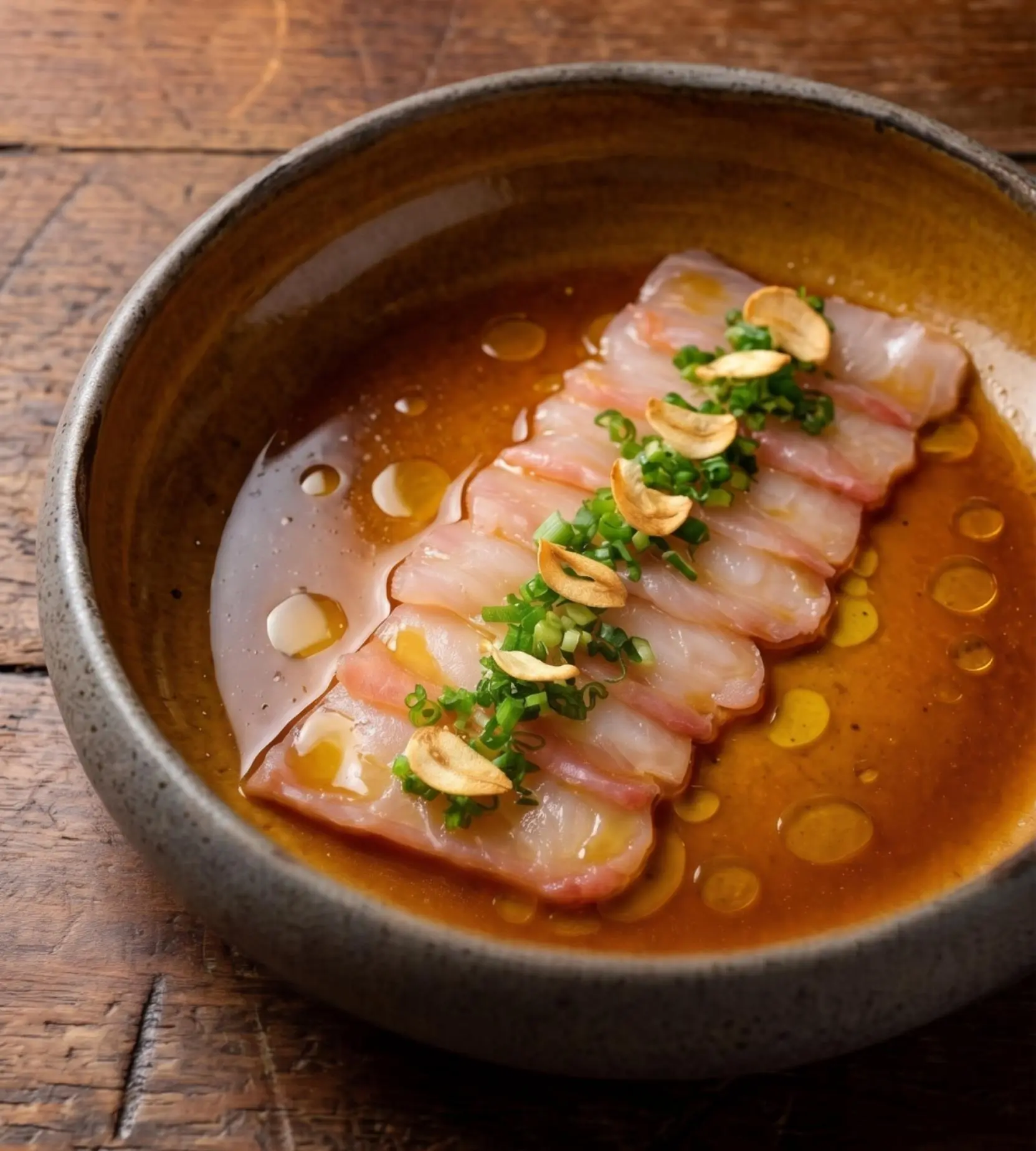
Tiradito is the Lima cousin of ceviche — the same superlatively-fresh raw white fish, the same leche de tigre (lime + ají + fish stock + garlic + onion juice), but cut and served completely differently. Where ceviche is cubes of fish marinated for several minutes in lime, with onion, tiradito is paper-thin sashimi-cut slices of fish, dressed à la minute with leche de tigre, and never with onion. The visual difference is immediate: a tiradito plate looks like sashimi (long slices fanned out), where a ceviche plate looks like a salad.
The flavor difference matters too. Tiradito is lighter, sharper, more elegant. Because the slices are thin and the marinating time is seconds (not minutes), the fish stays almost completely raw and translucent. The ají (yellow, rocoto, or limo, depending on the version) sits on top in dots or a glaze. There's no onion to crunch, no choclo, no camote — usually just the fish, the leche de tigre, and a small garnish of cilantro or a single ají slice.
Why try it
Tiradito is the dish to order after you've had ceviche, ideally on the same lunch. They're the same family but different conversations — ceviche is the loud, full-flavored cousin; tiradito is the quiet, precise one. A good cevicheria will serve them as a dúo: one of each, side by side, on the same plate or as two small plates.
Tiradito is also the dish that converts skeptics. People who think ceviche is "too oniony" or "too punchy" almost universally love tiradito on the first bite. If you're traveling with someone hesitant about raw fish, tiradito at a serious cevichería is the gentlest entry point.
How to order it
"Un tiradito clásico, por favor." (One classic tiradito, please.)
Versions you'll see on the menu:
- Tiradito clásico — corvina or lenguado, leche de tigre with ají amarillo. The default. S/35–55.
- Tiradito al rocoto — same fish, hotter version with rocoto chili. For people who like a kick.
- Tiradito al olivo — olive-and-leche-de-tigre version, dark and rich. A San Isidro / Miraflores classic.
- Tiradito nikkei — Japanese-style with soy, sesame oil, and ginger touches. The cleanest version.
- Tiradito de pulpo — octopus instead of fish. Also called tiradito al pulpo al olivo in some menus. Worth trying.
Always order tiradito at lunch, between 12:30 and 15:00, at a cevichería with high turnover. The fish should be cut to order and on your table within 8 minutes. Anything pre-cut and waiting in a fridge is not what you came for.
What it should cost
| Where | Tiradito (S/) |
|---|---|
| Menú del día | 18–28 |
| Mid-range cevichería (Punto Azul, Pescados Capitales) | 38–55 |
| Upmarket cevichería (La Mar, El Mercado) | 55–80 |
| Nikkei high-end | 90–150 |
Tiradito is generally 5–15% more expensive than ceviche at the same restaurant — the slicing labor and the better cut of fish drive the price.
How to eat it / pairings
- Eat each slice in one bite. They're cut for it.
- Don't pile sauce on extra. The leche de tigre is balanced; flooding the plate masks the fish.
- Drink it with chicha morada, white wine (Sauvignon Blanc), or a pisco sour. Beer also works. Avoid red wine — it fights the fish.
- Order a tiradito and a ceviche to share. This is what most Limeños do at a serious cevicheria.
Where to try it
- La Mar (Miraflores) — Av. La Mar 770. The famous one. Tiradito al olivo is the order. Lunch only.
- Punto Azul (Miraflores) — Calle San Martín 595. Mid-range, generous portions, real Limeños.
- El Mercado (Miraflores) — Rafael Osterling's project. Beautiful courtyard, more polished tiraditos.
- Maido (Miraflores) — Calle San Martín 399. The ultimate nikkei tiradito. Tasting menu only; book months ahead.
- Pescados Capitales (Miraflores) — Av. La Mar 1337. Reliable mid-range, classic tiradito al rocoto.
- Al Toke Pez (Surquillo) — Av. Angamos Este 886. The huarique tiradito, at Tomás Matsufuji's lunch-only counter.
For more on cevicherías as a format, see our cevichería concept page and the Miraflores food guide.
Origins
Tiradito's origin is contested — and the contest is itself worth knowing. The dish as it exists today is mostly a Lima nikkei invention from the 1960s–70s, attributed most often to Humberto Sato at his cevichería Costanera 700 (founded 1974), who codified the sashimi-cut technique that makes tiradito distinct from ceviche. The name "tiradito" — from the Spanish tirar, "to throw" or "to lay out" — refers to how the slices are arranged: laid out in a fan rather than tossed in a bowl.
Older Limeños will argue that thin-sliced fish dressed à la minute existed in coastal Peru long before the nikkei chefs formalized it — that fishermen on the docks of Chorrillos were eating something close to tiradito in the 1940s. Both are probably true: the dish is a fusion of pre-existing Peruvian coastal eating and the Japanese sashimi technique brought by the Sakura Maru immigrants of 1899 and refined over four generations of nikkei chefs in Lima. Today it is universally Peruvian, but its DNA is unmistakably nikkei.
For more on the cuisine that gave tiradito its modern form, see our nikkei concept page.
Related
- Ceviche — the famous cousin. Order both.
- Cevichería — where tiradito belongs.
- Nikkei fusion — the cuisine tiradito comes from.
- Peruvian Food 101 — the dish list every traveler should know.
- Miraflores food guide — where most great tiradito in Lima happens.